Attic Spray Foam Insulation
The single highest-impact insulation upgrade for a Littleton home — the attic is where winter heat escapes fastest and where summer sun hits hardest, often in the same year.
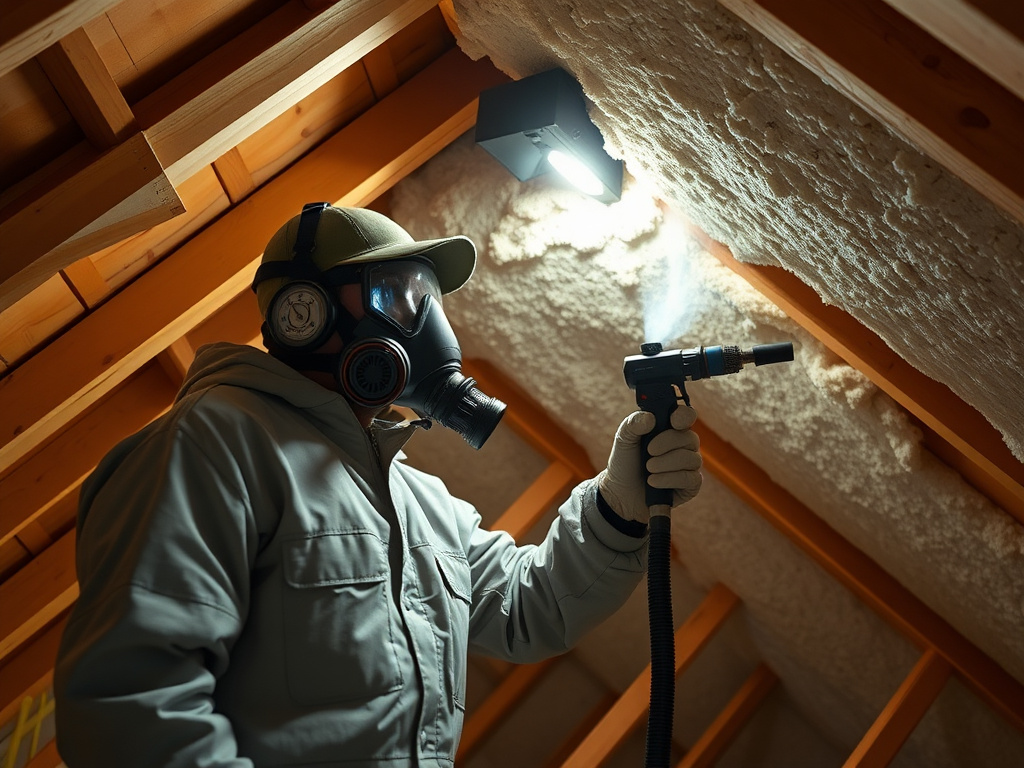
Littleton sits in IECC Climate Zone 5B, a cold, semi-arid continental climate with roughly 5,860 heating degree days a year against the National Weather Service's Denver-area climate normal — a genuine, dominant heating season — plus around 850 cooling degree days, a real but smaller summer cooling load. That combination means an under-insulated attic costs you twice: heat rises and escapes through a thin attic floor all winter, and the roof deck absorbs direct Front Range sun and pushes heat back down into living space in summer. The 2021 IECC code minimum for our climate zone calls for roughly R-49 of attic insulation, with Energy Star generally recommending a step above that for older homes starting from little to no existing coverage.
Spray foam insulation addresses this two ways at once: it insulates against heat transfer and it air-seals the attic in the same application, closing the gaps around wiring penetrations, top plates, and duct boots that fiberglass batts simply lie across without sealing. We install both roof-deck application (spraying the underside of the roof deck to bring the attic itself inside the home's conditioned envelope — a strong option if your ductwork runs through the attic, or if you're dealing with ice-dam-prone roof edges) and traditional attic-floor application, and we'll walk you through which approach fits your home's specific framing and duct layout during your free on-site assessment.
Why homeowners choose it
- Cuts the single largest source of winter heat loss and summer heat gain in a Littleton home — the attic floor and roof deck.
- Air-seals and insulates in one application, closing the gaps around duct boots, top plates, and wiring penetrations that batts leave open.
- Roof-deck (unvented, conditioned attic) application keeps the deck at a more stable temperature, which is the mechanism behind reducing melt-refreeze ice-dam cycles on Front Range roofs with big day-to-night swings.
- Doesn't settle, sag, or compress over time the way blown-in or batt insulation can after years of Littleton's freeze-thaw temperature swings.
- Reduces both furnace runtime in winter and AC cycling in summer — a genuinely dual-season upgrade, not a one-season fix.
Roof-deck vs. attic-floor application
Attic-floor application is the traditional approach — foam is sprayed across the attic floor between joists, keeping the attic itself vented and unconditioned while insulating the living space below. It's the more budget-friendly option and works well when ductwork isn't a factor.
Roof-deck (unvented/conditioned attic) application sprays foam directly to the underside of the roof deck and gable ends, bringing the whole attic inside the home's thermal envelope. This is the stronger choice when HVAC ductwork runs through the attic, and it's also the approach with a documented connection to ice-dam mitigation — keeping the roof deck at a more uniform temperature reduces the melt-refreeze cycle that causes ice dams on homes with big diurnal temperature swings, which the Front Range sees regularly.
- Attic-floor: lower cost, vented attic stays as-is
- Roof-deck: more stable deck temperature, ice-dam-mitigation angle, higher upfront cost
Open-cell or closed-cell for your attic?
Both are used in Littleton attics. Closed-cell delivers more R-value per inch, which matters when roofline depth is limited, adds rigidity, and functions as a vapor retarder — a real advantage on a cold-climate roof deck. Open-cell is more cost-effective per board foot and performs well for attic-floor coverage where depth isn't constrained and vapor control is less of a concern. Some installations use a hybrid — closed-cell as a vapor-control layer against the deck, open-cell to fill the remaining depth. We'll recommend the right mix for your specific roof assembly.
Ideal for
- Homes with visibly thin, compressed, or unevenly distributed attic insulation
- Homes with ductwork running through an unconditioned attic
- Older Littleton homes — especially Old Littleton and postwar-era (1950s-1970s) housing stock built before modern energy code
- Homeowners who've noticed ice dams, icicles, or a cold, drafty upstairs in winter
What affects the cost
Attic Insulation questions, answered
Spray foam insulation project costs vary widely by scope, but industry cost guides commonly cite whole-project ranges from roughly $900 to $5,000+ depending on square footage, and closed-cell running higher per board foot than open-cell. A typical attic project's exact number depends heavily on your home's framing and access — a free on-site assessment gets you a firm quote rather than a rough guess.
For homes with thin, settled, or gap-riddled attic insulation, yes — often meaningfully. Because spray foam air-seals as it insulates, it closes the pathways that let winter heat escape and summer attic heat infiltrate, which drives a meaningful share of both a Littleton furnace's winter runtime and an AC's summer cycling. Actual savings depend on your home's starting condition and current insulation levels.
Attic Insulation done right, by a local Littleton crew
Attic Insulation isn't a commodity — the result depends entirely on how carefully it's planned and installed for your specific home and Littleton's real cold-winter, warm-summer Zone 5B climate. We assess what your house actually needs, prep and air-seal properly, and install to your Zone-5B-appropriate R-value target, so the work delivers the comfort and savings it's supposed to.
We serve Littleton, Highlands Ranch, Centennial, Englewood, Lone Tree, Parker, Castle Rock, and Ken Caryl / Columbine Valley. Every job starts with a free, no-pressure quote.
Just as important, we treat your home like the system it is. Insulation, air sealing, and the rim joist all interact, and getting one right while ignoring the others leaves comfort and savings on the table. When we scope your attic insulation, we look at how it fits the whole picture — so the finished result performs the way it should, holds up through a genuine Littleton winter and summer, and actually lowers the bills you feel every month.
Free assessment
We evaluate your home and give you a clear, itemized quote.
Expert install
We prep, air seal, and install your attic insulation to spec — clean and on schedule.
Savings you can feel
A cooler home, lower cooling bills, and honest advice about what your home needs.
Related services
Ready for a free attic insulation quote?
Tell us about your home and we'll put together a clear, no-pressure spray foam insulation quote — built for Littleton's real winters and real summers.