Garage Spray Foam Insulation
An uninsulated Littleton garage runs close to outdoor temperature through a real winter — and that cold (or, in July, that heat) radiates straight into any room that shares a wall, ceiling, or floor with it.
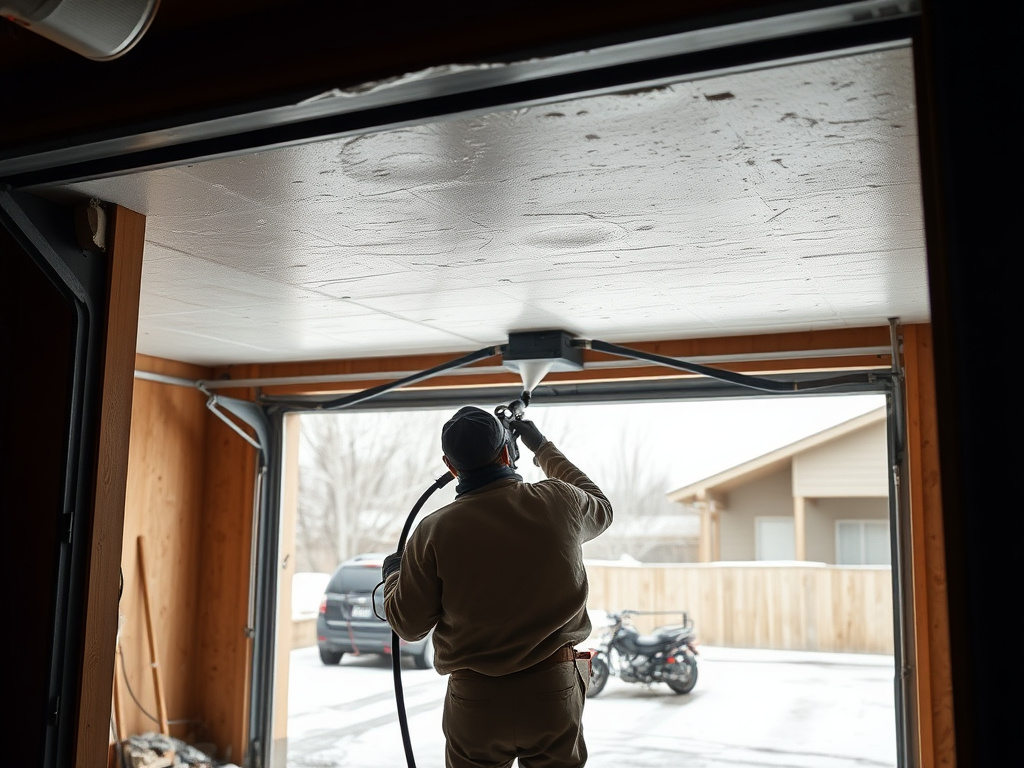
Garages are one of the most commonly under-insulated spaces in Front Range homes, and one of the most consequential. A standard garage door isn't a strong thermal barrier, and many garages have minimal or no wall and ceiling insulation to begin with — which means a Littleton garage can sit close to outdoor winter temperatures for days at a stretch, and swing hot in direct summer sun. That temperature extreme doesn't stay contained: it moves through a shared wall into an adjoining bedroom or living room, and through a shared floor into any room built above the garage — commonly called a bonus room. Homeowners with a bonus room over the garage often describe it as the coldest room in the house all winter, and that's usually a direct symptom of an uninsulated garage ceiling, not a heating-system problem.
There's a practical cold-climate stake here too: an uninsulated, unheated garage with plumbing running through it — a utility sink, a water line to an exterior spigot — carries real freeze risk during a hard Front Range cold snap. Spray foam insulation on garage walls, the garage ceiling, and the underside of a bonus-room floor closes that heat pathway and reduces that swing. Closed-cell foam is typically the right call here, given the wide temperature swings a garage experiences and the added durability against dust and vehicle exhaust exposure. This is one of the highest-value, most targeted projects we do — a relatively contained space with a very direct, noticeable comfort payoff in the rooms next to and above it.
Why homeowners choose it
- Stops the garage from acting as a cold (winter) or hot (summer) radiator into adjoining bedrooms, living rooms, and above-garage bonus rooms.
- Makes an above-garage bonus room meaningfully more usable year-round instead of sitting cold from November through March.
- Reduces freeze risk for any plumbing routed through an unheated or under-insulated garage during a hard cold snap.
- Closed-cell foam's rigidity and moisture resistance hold up well to a garage's dust, exhaust, and wide temperature swings.
- Air-seals gaps around garage door framing, service doors, and wall penetrations that let cold or hot air migrate into living space.
What gets insulated in a garage project
A typical garage insulation project covers the shared wall(s) between the garage and living space, the garage ceiling (especially critical if there's a bonus room above), and sometimes the garage's own exterior walls if it's a heavily used or finished space. We assess which surfaces are actually driving the temperature transfer into your living space before recommending full coverage.
- Shared interior walls between garage and living space
- Garage ceiling / underside of an above-garage bonus room floor
- Exterior garage walls, for finished or heavily used garages
Ideal for
- Homes with a bedroom or living room sharing a wall with the garage
- Above-garage bonus rooms that run noticeably colder (or hotter) than the rest of the house
- Garages with plumbing lines at real freeze risk during winter cold snaps
- Garages used as workshops, gyms, or storage for temperature-sensitive items
What affects the cost
Garage Insulation questions, answered
This is almost always a garage-ceiling insulation problem, not a furnace sizing issue. An uninsulated garage runs close to outdoor temperature through a Littleton winter, and that cold transfers directly into the floor of any room built above it. Spray foam insulation on the garage ceiling closes that heat-loss pathway, and most homeowners notice a real difference in that specific room afterward.
We typically recommend closed-cell for garage applications. Garages see wider temperature swings and more exposure to dust and vehicle exhaust than interior living spaces, and closed-cell's density and moisture resistance hold up better under those conditions than open-cell.
Garage Insulation done right, by a local Littleton crew
Garage Insulation isn't a commodity — the result depends entirely on how carefully it's planned and installed for your specific home and Littleton's real cold-winter, warm-summer Zone 5B climate. We assess what your house actually needs, prep and air-seal properly, and install to your Zone-5B-appropriate R-value target, so the work delivers the comfort and savings it's supposed to.
We serve Littleton, Highlands Ranch, Centennial, Englewood, Lone Tree, Parker, Castle Rock, and Ken Caryl / Columbine Valley. Every job starts with a free, no-pressure quote.
Just as important, we treat your home like the system it is. Insulation, air sealing, and the rim joist all interact, and getting one right while ignoring the others leaves comfort and savings on the table. When we scope your garage insulation, we look at how it fits the whole picture — so the finished result performs the way it should, holds up through a genuine Littleton winter and summer, and actually lowers the bills you feel every month.
Free assessment
We evaluate your home and give you a clear, itemized quote.
Expert install
We prep, air seal, and install your garage insulation to spec — clean and on schedule.
Savings you can feel
A cooler home, lower cooling bills, and honest advice about what your home needs.
Related services
Ready for a free garage insulation quote?
Tell us about your home and we'll put together a clear, no-pressure spray foam insulation quote — built for Littleton's real winters and real summers.